Introduction
Since the founding of the nation, slavery in the United States was embedded as a legal practice through economic and religious justifications. But as time passed by,the North had the belief that African Americans should not be under bondage, meanwhile the South wanted to protect this practice by their justification of economic means and religious beliefs. Causing division in government, fighting broke out between the American people and this went on and on until open conflict in 1861. The American civil war was the bloodiest conflict for the U.S. to this day according to the ABT, over the issue of whether slavery should be part of the U.S. Under the leadership of president Abraha Linclon, he ended slavery in the south and turned the wave of the war by uniting the nation by his powerful speeches like the Gettysburg address , and with big advantages such as industrial resources, a strong government, and a bigger army, in 1865 the fighting stopped and the Union was victorious. This marked the beginning of the reconstruction era, an era of the North being more involved in the South to make them accept the new law of the land, that slavery was banned and the freedmen and freedwomen and children were free.
With amendments being passed by congress such as the 13th to end slavery in the whole nation, the 14th to grant citizenship to whoever is born on American soil, and the 15th to prevent states from prohibiting the right to vote based on race or color. All of these were intentions of the North to help the Black have equal participation in American society. Also, organizations like the Freedmen’s Bureau were established to provide food, housing, and also education to African Americans. But as time passed, the North started to shift their view away from the reconstruction plan and deal with other problems like the panic of 1873 with economic issues and political issues like the compromise of 1877. Forced the North to take matters of other things, thus ending the reconstruction era.
The margin
What gets minimized in a history class is how they faced multiple problems that the reconstruction plan failed to address. Economically, they were still dependent on the Whites with the enforcement of the black codes that limited their political rights but also their economic freedom. If they didn’t sign a yearly labor contract, they were forced to be in labor against their wishes and run the risk of being arrested, they could also not own certain property limiting their options. This caused them to be in labor under white owners’ land, again. Socially, they were faced with oppression with violence like the KKK and also a lot of riots according to a Freedmen’s Bureau report in 1866. With the goal to stop the freedmen from voting and affecting the outcomes in elections, and also they were still looked down upon by the white race, they were free but they were not equal to the white supremacist. Unfortunately, they were also restricted from their political rights, they were not allowed to be part of a jury, not able to go against a white in court, and more importantly they were denied their voting rights and had no political position according to . This would later on, would be looked at by the American people as a failure by the lack of equality that freedmen and freedwomen faced despite the fact that the federal government was ‘helping’ the African American community.
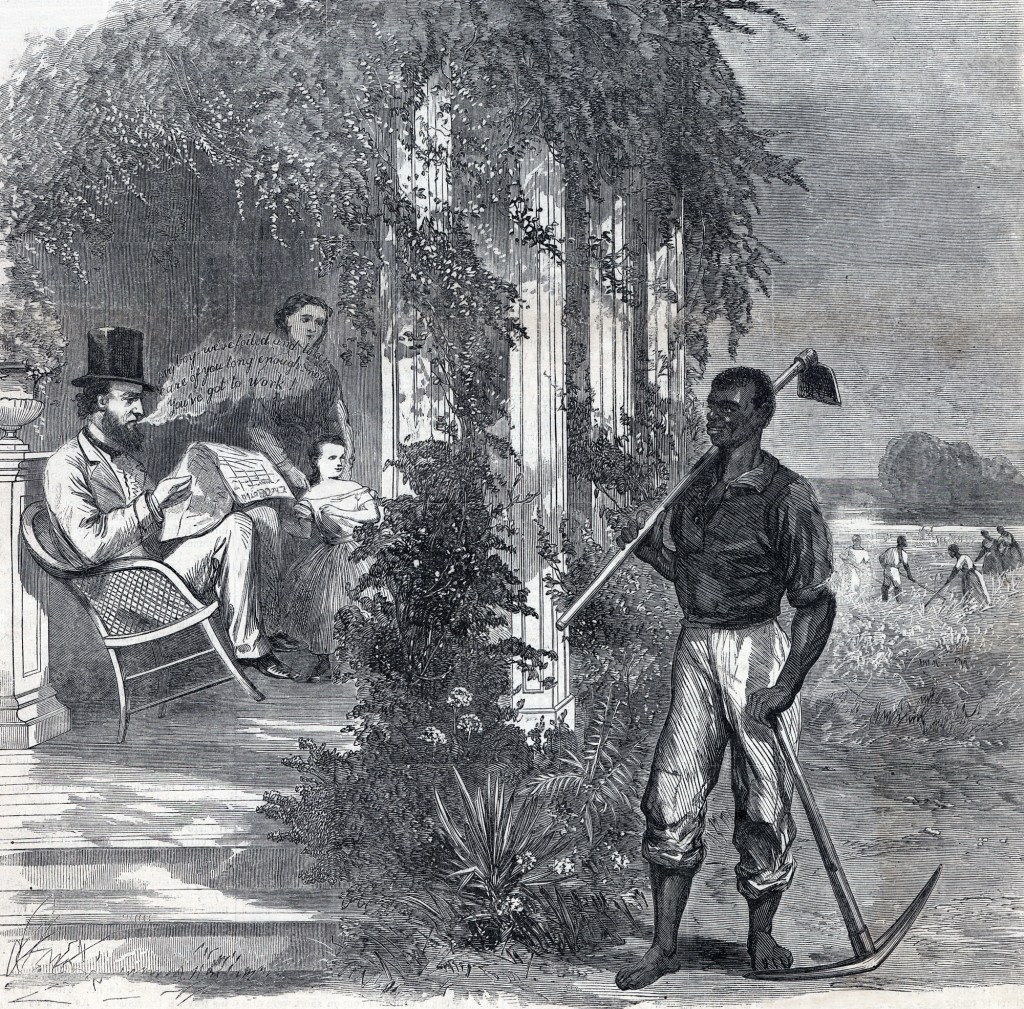
(The Labor Question from a Southern Point of View, Harper’s Weekly, July 1865)
The stand
But even so, calling Reconstruction a failure and not diving into the effects it had, is too plain to describe it. Without looking at the whole picture, Americans come up with a conclusion that does not address the actual source of blame. When the federal troops were removed during the compromise of 1877, the system immediately failed without the enforcement of the North. That’s why wording matters, this would be a ‘failure’ in the history books but I disagree. It was not the African American’s fault but the North because they did not stick to their integrity and chose their agendas over the well being of the African Americans. History events like this should make people stop and think, wonder what went wrong instead of jumping to conclusions.
If freedom without protection is not truly freedom, then what was Reconstruction ever capable of being?
Sources
- Charles F. Johnson. “The Freedmen’s Bureau Report on the Memphis Race Riots of 1866”. Other, May 22, 1866. From Teaching American History
- https://www.battlefields.org/learn/articles/civil-war-casualties
- https://constitutioncenter.org/the-constitution/historic-document-library/detail/mississippi-south-carolina-black-codes-1865
 In the Margins
Leave a comment